
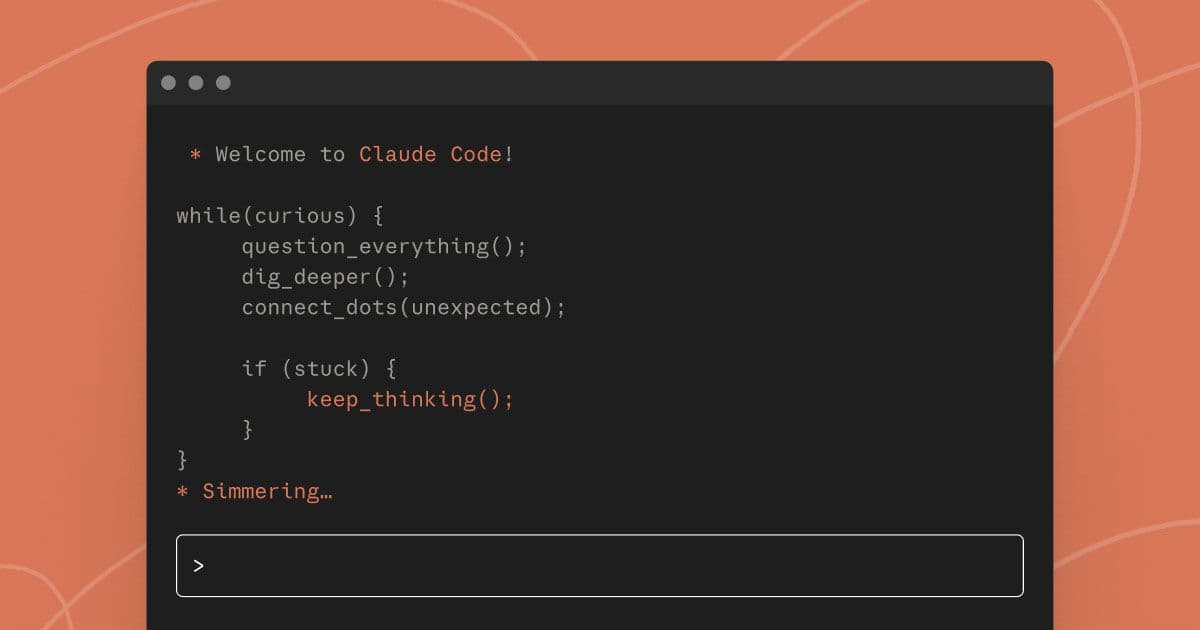
A post went viral on X last week. Someone shared that Anthropic — the AI company behind Claude — runs their entire marketing function with one non-technical person and Claude Code. Not a 10-person team. Not even a 3-person team. One person. 240,000 views, 1,800 likes, and a reply thread full of small business owners asking the same question: can we actually do that?
Short answer: yes. And the businesses that figure this out in 2026 are going to look very different from the ones still hiring junior marketers to write blog posts and schedule social content.
This isn't about replacing people. It's about what one well-organized person with the right AI tools can actually accomplish.
The Anthropic Story That Changed the Conversation
Anthropic built one of the most talked-about AI products on the market. They publish research papers. They ship products. They run a content operation. And their marketing team is one non-technical person running it all with Claude Code and agentic workflows.
The response from most people: "That's a tech company with a special advantage." Fair. But think about what Anthropic's marketing actually involves: blog content, social presence, email communications, product announcements, partnership coordination. These are the same functions every small business needs.
The difference isn't the tools available to Anthropic. GPT-4o, Claude, Perplexity, and a dozen AI agent platforms are available to any business today. The difference is that Anthropic built a clear process and then used AI to execute it at scale.
That's the part most businesses skip. They adopt the tools but skip the process. We'll come back to that.
Why This Is Happening Right Now
A few things converged in the last 60 days that make the 1-person marketing team possible in a way it wasn't before.
AI agents can now take action, not just generate text. Perplexity just launched a Computer Agent that runs entire ad campaigns autonomously — it searches for keywords, writes copy, sets targeting, and optimizes bids. That post announcing it hit 2.1 million views in 48 hours. Businesses saw it and immediately started asking: what else can agents do for us?
The scheduling and orchestration layer is finally mature. Claude's Cowork feature, which we covered in a detailed guide a few weeks ago, lets you set up recurring AI workflows that run on a schedule. Write a post every Tuesday. Send a weekly performance summary every Friday. Review your inbox and draft replies every morning. These aren't hypotheticals — they're running right now in businesses that set them up.
The tools talk to each other. AgentMail just raised $6M to give AI agents their own email inboxes. Ford built an AI system that analyzes vehicle data and generates maintenance recommendations. Adobe added an AI assistant to Photoshop that edits images from conversational instructions. Every major software platform is adding an API layer that agents can plug into. The connective tissue between tools is finally there.
The 7 Marketing Functions AI Handles Today
Here's a practical breakdown of what AI can own right now — not theoretically, but with tools you can set up this week.
1. Content Creation
Blog posts, social captions, email newsletters, ad copy. AI can draft all of it. The key is giving it your brand voice in writing (a system prompt or style guide), not just asking it to "write like us." The output quality difference between a vague instruction and a detailed brief is enormous.
2. Content Scheduling
Tools like Buffer, Hootsuite, and Publer all have AI-assisted scheduling built in. You approve the content, the AI picks the optimal posting time. Better: set up a Claude Cowork scheduled task to draft your week's social content every Sunday evening so you start Monday with a queue ready to go.
3. Email Sequences
Lead nurture sequences, onboarding emails, re-engagement campaigns — these are perfect AI territory. The logic is clear, the variations are finite, and the execution is repeatable. Write the sequence once, let AI personalize it at scale, review the outputs before anything goes live.
4. Ad Campaign Management
Google Ads and Meta Ads both have AI optimization built in. Perplexity now has an agent that manages the entire campaign lifecycle. For most small businesses, the right move isn't a fully autonomous agent — it's AI-assisted targeting and copy testing with a human reviewing spend weekly.
5. Performance Reporting
Every Monday morning you could have a clean report in your inbox: last week's traffic, top pages, conversion rate, lead count, email open rate, and a plain-English summary of what moved. That's a 2-hour weekly task for a junior analyst. It's a 5-minute Claude Cowork setup for someone who knows what they're doing.
6. SEO Research and Optimization
Keyword research, competitive analysis, on-page optimization recommendations — AI handles all of it. Tools like Semrush have AI built in. Claude can analyze your existing content and flag what needs updating. The research that took a week now takes an afternoon.
7. Lead Follow-Up
New contact form submission? An AI-assisted workflow can send a personalized acknowledgment email, qualify the lead with a follow-up question, and add them to the right email sequence — all before you've even seen the notification. The average business takes 47 hours to follow up on a lead. An AI-assisted system can respond in under 5 minutes.
How We Run the Same Model at EAC
We're not going to tell you this works and then reveal we have a team of 10 doing it. EAC's marketing operation — blog publishing, social engagement, newsletter, email, lead nurture — runs with one person and Claude Code.
Here's what that actually looks like:
- Blog posts are drafted with Claude, fact-checked, edited, and published with a single CLI command that seeds the content to our database and triggers a Vercel deploy
- Social engagement happens through a skill that reads trending AI news, drafts contextually relevant replies, and surfaces them for review before anything gets posted
- The newsletter gets assembled from recent blog content, curated AI news, and a hand-written intro — the assembly is automated, the voice is not
- Lead follow-up runs through our chatbot (built with our own AI chatbot guide), which handles first-contact qualification and hands off to a human for discovery calls
None of this required hiring. None of it required a marketing agency. It required building clear processes and then building AI workflows on top of them.
The Process-First Rule (The Part Most Businesses Skip)
The Anthropic story is compelling but incomplete if you only focus on the headcount number. The real story is that one person with a clear system can accomplish what a team without one cannot.
AI amplifies what you've already documented. It can't fix chaos.
If you don't have a defined brand voice, AI will write generically. If you don't have a documented content calendar, AI will produce content without a coherent arc. If you don't have a clear lead qualification process, AI will automate the wrong steps.
The businesses that fail with AI marketing automation fail here — not because the tools don't work, but because they tried to automate chaos instead of systematize it first.
Three things to document before you build anything:
- Your brand voice. One page. How you sound, what you say, what you never say. Include 3 real examples of content you've written that feels right.
- Your customer journey. First touch → qualified lead → proposal → close. What happens at each stage and who (or what) handles it.
- Your content pillars. 3-5 topics you consistently write about. This keeps AI-generated content coherent over time instead of lurching between unrelated subjects.
Once these exist in writing, AI can work from them. Until they exist, AI is making things up.
Where to Start: 3 Workflows for Small Businesses
Don't try to automate everything at once. Pick one workflow, build it properly, run it for 30 days, then add the next one.
Workflow 1: Weekly Content Draft
Every Monday morning, Claude reads your content pillars, checks what you've published recently, and drafts 3 social posts and an outline for one blog post. You review and edit. You don't start from blank anymore — you start from a draft.
This alone saves most small business owners 3-5 hours per week and means content actually gets published consistently.
Workflow 2: Lead Follow-Up Sequence
New lead comes in from your contact form. An automated email goes out within 5 minutes — personalized to whatever they wrote in the message. If they don't respond in 48 hours, a second email follows up with a case study or relevant resource. After 7 days of silence, they go into a nurture sequence.
Most small businesses do zero of this. The ones that do it manually are inconsistent. An AI-assisted sequence runs the same way every time, for every lead.
Workflow 3: Weekly Performance Report
Every Friday at 4pm, a report hits your inbox. Last week's website traffic, top pages, new leads, email open rate, social reach. A 3-sentence plain-English summary of what went up, what went down, and what to pay attention to next week.
This isn't a "nice to have." Business owners who look at performance data weekly make faster course corrections than those who check quarterly. This workflow makes that happen automatically.
What You Still Can't Automate
It's worth being direct about what AI doesn't do well in marketing — because overselling it leads to disappointment.
Relationships. A client who's been with you for five years doesn't want an AI-written birthday email. They want you. The customer relationships that drive referrals and retention are human. Don't automate them.
Strategic judgment. AI can tell you what content performed best last month. It can't tell you whether to double down on a niche, reposition your offer, or walk away from a service line. Those calls require context that only you have.
Brand character. The things that make your business feel like a real business — your opinions, your stories, your personality — come from you. AI can write in your style. It can't have your point of view. Give it yours in writing and it gets much better. Expect it to generate one organically and it gets generic.
The 1-person marketing team isn't a person who does nothing. It's a person who does the things only they can do — and lets AI handle everything else.
If you want to build this kind of operation for your business — the workflows, the voice documentation, the tool setup — that's exactly what we help with. Start with a strategy session and we'll map out which marketing functions make sense to automate first, what tools fit your budget, and what you need to document before the AI can actually help you.

Elevated AI Consulting
Sam Irizarry is the founder of Elevated AI Consulting, helping businesses grow through strategic marketing and AI-powered solutions. With 12+ years of experience, Sam specializes in local SEO, web design, AI integration, and marketing strategy.
Learn more about us →